Showing posts with label Lilith Antinori. Show all posts

Monday, January 5, 2009

Soldier in Al-Funduq

© Lilith Antinori, December 2008. Al-Funduq, The West Bank, Occupied Palestinian Territories.

An Israeli soldier stands by during a prayer vigil on the outskirts of Al-Funduq. All protests and public events have the potential of becoming violent demonstrations, and the army was called out after a week of settler violence to keep the vigil from becoming more violent settler backlash in Al-Funduq. Though the army's concern was clearly for the wellbeing of the settlers, and not the Palestinians nearby, there was no violence that afternoon.

Through The Looking Glass

© Lilith Antinori, October 2008. Nablus, The West Bank, Occupied Palestinian Territories.

A window cracked from gunfire on the walk up to my flat in Nablus.

Omar Abdullat

© Lilith Antinori, September 2008. Ramallah, The West Bank, Occupied Palestinian Territories.

Omar Abdullat, a Jordanian singer, holds up the Palestinian and Jordanian keffiyehs in a display of solidarity and brotherhood while in concert in Ramallah.

In Conversation

© Lilith Antinori, December 2008. Al-Funduq, The West Bank, Occupied Palestinian Territories.

An Israeli soldier and settler talk and laugh while his child looks on.

Prayers Behind Bulletproof Vests

© Lilith Antinori, December 2008. Al-Funduq, The West Bank, Occupied Palestinian Territories.

"The main roads into and out of Nablus were blocked by settlers, as were Huwwara, Beit Iba and Beit Furiq checkpoints, leaving many Palestinians stranded for hours. Settlers also blocked roads and attacked Palestinians in the villages of Huwwara, Burin, Al-Funduq, Turmasayya, and the old city of Jerusalem. The main road from Nablus to Qalqilia was blocked on Thursday night, only partly opening on Friday, with the section from Nablus to al Funduq closed by Israeli soldiers throughout Friday. Roads between Kufr Laqif and Jinsafut in Qalqiliya region; and Deir Istiyia to Haris in Salfit region were also closed due to settlers stoning Palestinian cars.

Two days after settlers attempted to block Huwwara checkpoint, Palestinians are still denied entrance into Nablus via the key checkpoint. Israeli soldiers now, rather than Israeli settlers, block the main entrance to Nablus. As Ahmad Soufan says, `I think the Israeli settlers and the Israeli army are working together.` As part of its attempt to appear to `crackdown` on ultra-right wing settler extremists, on Thursday 4th December, the Israeli army finally carried out the Israeli supreme court ruling to evacuate one settler-occupied but Palestinian- owned house in Hebron. Although the Israeli authorities received the order to evacuate the illegal settlers more than two weeks ago, Israeli military officials, expecting a settler backlash, waited until precisely the time when most Palestinians would be out of their houses to carry out the command."

- excerpt from the ISM (International Solidarity Movement) report on the violence that week

Israeli Settler

© Lilith Antinori, December 2008. Al-Funduq, The West Bank, Occupied Palestinian Territories.


"On Thursday 4th December, extremist Israeli settlers began a multiple-day rampage throughout the West Bank in response to the eviction of a single settler-occupied house in Hebron. Beginning at 3pm, thousands of settlers blocked roads throughout the West Bank, stoning cars, attacking houses, burning olive groves and desecrating mosques.

The main roads into and out of Nablus were blocked by settlers, as were Huwwara, Beit Iba and Beit Furiq checkpoints, leaving many Palestinians stranded for hours. Settlers also blocked roads and attacked Palestinians in the villages of Huwwara, Burin, Al-Funduq, Turmasayya, and the old city of Jerusalem. The main road from Nablus to Qalqilia was blocked on Thursday night, only partly opening on Friday, with the section from Nablus to al Funduq closed by Israeli soldiers throughout Friday. Roads between Kufr Laqif and Jinsafut in Qalqiliya region; and Deir Istiyia to Haris in Salfit region were also closed due to settlers stoning Palestinian cars."

- excerpt from the ISM (International Solidarity Movement) report on the violence that week

Sunday, January 4, 2009

Standing Together - An Israeli Settler and Soldier

© Lilith Antinori, December 2008. Al-Funduq, The West Bank, Occupied Palestinian Territories.

"Ramallah is not Auschwitz. Israel is not the Third Reich. We have no death camps and we haven't massacred one third of the Palestinian population in gas chambers. Therefore, everything we do is quite all right. We may fill the occupied territories with tear gas and blood, we may kill and injure and torture and blackmail and dispossess, we may surround millions by electric fences and tanks in tiny enclaves, we may hold them under siege and daily bombing, we may make pregnant women walk to hospitals, and we shoot ambulances too, don't we. But as long as we fall even an inch short of the atrocities of Nazi Germany, it's all fine and good, and don't you dare make the comparison."

Ran HaCohen - writer, teacher, Tel-Aviv University, and a strong critic of Israel's policies

Nablus

© Lilith Antinori, September 2008. Nablus, The West Bank, Occupied Palestinian Territories.

The city of Nablus, the largest in the West Bank, is home to more than 130,000 people.

For Gaza

© Lilith Antinori, November 2008. Nablus, The West Bank, Occupied Palestinian Territories.

A child stands in a candlelit vigil in Nablus in protest of the siege in Gaza that began November 5, 2008.

Friday, January 2, 2009

Boys in Balata

© Lilith Antinori, November 2008. Balata Refugee Camp, The West Bank, Occupied Palestinian Territories. 

Young boys in Balata Refugee Camp vending fruit take a break to pose for the camera.

Soldiers Arrive

© Lilith Antinori, December 2008. Al-Funduq, The West Bank, Occupied Palestinian Territories.

Israeli soldiers arrive at Al-Funduq with a stated mission of protecting Palestinian villagers from incoming settlers while a wave of settler violence sweeps through the West Bank after a home is evicted in Hebron.

Nothing, pt. 2

© Lilith Antinori, November 2008. Balata Refugee Camp, The West Bank, Occupied Palestinian Territories.

"There was no such thing as Palestinians... they never existed."

- Golda Meir
15th June 1969

Nothing, Pt. 1

© Lilith Antinori, November 2008. Balata Refugee Camp, The West Bank, Occupied Palestinian Territories. 

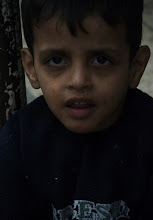
A severely traumatized and unresponsive boy in Balata Refugee camp sits down on the street corner to eat a banana.

Remains

© Lilith Antinori, November 2008. Balata Refugee Camp, The West Bank, Occupied Palestinian Territories.

A wall bearing the scars of Israeli invasions into the camp during the second intifada.

Israeli Soldiers

© Lilith Antinori, September 2008. Kalandia Checkpoint, The West Bank, Occupied Palestinian Territories.

"We occupied a house in Hebron. You know the procedure – the family moves to the bottom floor. We were on the third floor, and we set up a hose to urinate into, which would drain outside. 

We placed the hose so that the urine would flow into the yard beneath us. There were some chicken coops there, and that’s where it fell. And that was the daily joke. To wait until the father or one of the children would reach the chicken coops, and then everyone pisses. ...Those were some of your options... There’s no one to judge you for it."

-An extract from an interview with a veteran Israeli Staff Sergeant who occupied Hebron in 2003

Trespass

© Lilith Antinori, September 2008. Kalandia Checkpoint, The West Bank, Occupied Palestinian Territories

A woman trying to get to Al-Aqsa to pray on the last Friday of Ramadan looks over the Separation Barrier at the Kalandia Checkpoint.

Collective Punishment

© Lilith Antinori, September 2008. Kalandia Checkpoint, The West Bank, Occupied Palestinian Territories.

"What is necessary is cruel and strong reactions. We need precision in time, place, and casualties...we must strike mercilessly, women and children included. Otherwise, the reaction is inefficient. At the place of action, there is no need to distinguish between guilty and innocent."

- David Ben-Gurion
1st January 1948


Fatima Khalil

© Lilith Antinori, October 2008. Haifa, Israel.

Fatima Khalil is an illiterate Palestinian beggar living in the Israeli city of Haifa.

Youth

© Lilith Antinori, October 2008. Nablus, The West Bank, Occupied Palestinian Territories.

A young Palestinian boy dressed in traditional clothing stands for the camera.